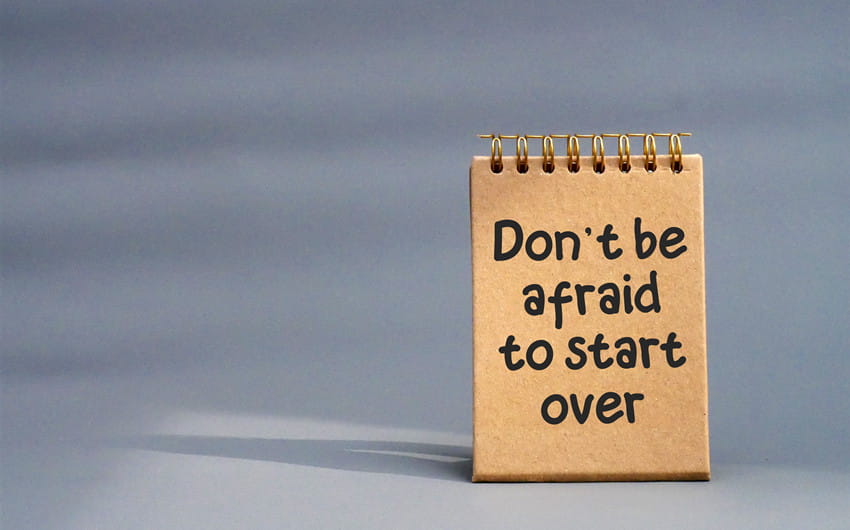
What I’ve Learned From Starting Over in Small Ways
When people talk about starting over, they usually mean something dramatic. A new city. A new job. A major breakup. A complete reinvention. The kind of reset that comes with a big story attached to it.
But most of my “starting over” moments haven’t looked like that.
They’ve been small. Quiet. Almost invisible from the outside. They’ve been the kind of changes you make when you realize a certain version of you isn’t working anymore, and you don’t want to keep repeating the same day forever.
I’ve started over in small ways more times than I can count. And the truth is, those small restarts have taught me more than any big, dramatic pivot ever could.
Small Starts Are Less Scary, Which Is Why They Work
Big change is intimidating because it demands everything at once. Big change asks for total commitment, total clarity, and a lot of emotional energy. When I try to change my whole life overnight, I usually crash. I either burn out or return to old habits because the shift was too sharp.
Small starts don’t trigger the same fear.
A small start is something like:
- Going to bed 30 minutes earlier.
- Cleaning one drawer instead of the whole house.
- Taking a short walk after dinner.
- Writing one paragraph instead of “starting a book.”
- Cooking one simple meal instead of changing your entire diet.
- Sending one honest message instead of fixing the whole relationship.
Small starts feel doable. And “doable” is powerful because it builds momentum. A small win is proof that you can move, even when motivation is low. That proof matters more than hype.
Starting Over Is Often Just Returning to the Basics
One of the most surprising things I’ve learned is that “starting over” isn’t always about doing something new. Often it’s about returning to what you already know works, but stopped doing.
For me, the basics are simple:
- Sleep enough to function like a decent human.
- Eat in a way that doesn’t leave me feeling worse.
- Move my body, even lightly.
- Keep my space from turning into chaos.
- Limit the noise I let into my mind.
- Talk to people I trust instead of isolating.
When my life feels off, it’s usually because I drifted away from those basics. Starting over in small ways often means rebuilding the foundation, not chasing a brand-new personality.
The basics are not glamorous, but they are stabilizing. And stability is what makes change possible.
Small Restarts Teach You That You’re Not Stuck
There’s a particular kind of hopelessness that comes from feeling stuck. Like you’re trapped in your own habits, your own routines, your own patterns of thinking. When I’m stuck, my brain speaks in absolutes:
- “This is just how you are.”
- “You always mess it up.”
- “You can’t change.”
- “It’s too late.”
Small restarts challenge those lies.
When you start over in a small way, you prove that movement is possible. Even a tiny shift breaks the spell of stuckness. It interrupts the pattern. It reminds you that your life is not a fixed object. It’s a living thing. And living things can change.
This is one of the reasons I value small restarts so much: they’re not just practical. They’re psychological. They change what you believe about yourself.
Starting Over Doesn’t Require Perfect Motivation
I used to wait for motivation like it was a green light. I thought I needed to feel inspired to begin again. If I didn’t feel ready, I assumed it meant I wasn’t serious or it wasn’t the right time.
Ordinary life cured me of that idea.
Motivation is unreliable. It comes and goes. If I wait for it, I stay in the same place. Starting over in small ways taught me that action is often what creates motivation, not the other way around.
When I take a small step, I start feeling more capable. When I feel more capable, I take another step. That’s the loop. That’s how you rebuild yourself without a dramatic personality overhaul.
You don’t need a huge emotional surge to restart. You need one small action that you can repeat.
Small Starts Make You Honest About Your Patterns
Here’s something I didn’t expect: small restarts reveal your real obstacles.
When a goal is huge, it’s easy to blame the size of it. “Of course I failed, it was too big.” But when the restart is small—five minutes, one task, one simple habit—your excuses get exposed. Not in a shameful way, but in a clarifying way.
If I can’t do something small, it means something deeper is going on.
Maybe I’m overwhelmed. Maybe I’m afraid. Maybe I don’t believe I deserve improvement. Maybe I’m clinging to an identity built around struggle. Maybe I’m addicted to distraction. Maybe I’m too tired to care.
Small starts don’t just change your behavior. They reveal what’s under your behavior. And that knowledge helps you grow with more honesty.
Starting Over Is Less About Willpower and More About Environment
I used to see starting over as a willpower issue. I thought I needed to be tougher, more disciplined, more “locked in.” But the more I pay attention, the more I realize environment matters more than willpower.
If my phone is always within reach, I’m going to scroll more. If my kitchen is set up for convenience junk, I’m going to eat it. If my room is cluttered, my mind feels cluttered. If I’m around constant negativity, I start thinking in darker tones.
So when I restart, I try to adjust my environment in small ways:
- Put the phone in another room for a while.
- Make the bed so the room feels calmer.
- Keep water visible so I drink more.
- Lay out walking shoes so movement is easier.
- Clear one surface so I can think.
These changes are tiny, but they reduce friction. And friction is what kills new habits. If you want to start over, make the better choice easier to reach.
Small Restarts Teach You to Forgive Yourself Faster
Starting over implies that something didn’t go the way you wanted. There’s usually a mistake or a drift involved. And if you’re like me, self-judgment can show up fast.
I’ve learned that shame doesn’t help a restart. Shame keeps you stuck because it makes you feel like you don’t deserve improvement. It turns restarting into punishment instead of care.
Small restarts taught me to forgive myself faster because they’re built into normal life. You miss a day, you return. You slip, you reset. You fall behind, you begin again.
It becomes less dramatic. Less personal. More like brushing your teeth. If you skip once, you don’t declare your mouth ruined forever. You brush next time. You keep going.
This mindset has helped me a lot. It keeps me from turning normal human inconsistency into a full identity crisis.
Starting Over in Small Ways Builds Trust With Yourself
One of the deepest things I’ve learned is that small restarts build self-trust.
Self-trust isn’t just confidence. It’s the belief that you will show up for yourself. It’s the belief that if things get messy, you won’t abandon your own life. You’ll return. You’ll try again. You’ll take care of what you can.
Every small restart is a promise kept.
When I say, “I’m going to start walking again,” and then I walk for ten minutes, I’m building trust. When I say, “I’m going to write again,” and then I write one paragraph, I’m building trust. When I say, “I’m going to get my life back in order,” and then I clean one corner of a room, I’m building trust.
That trust is quiet, but it changes everything. It makes the next restart easier. It makes your inner voice kinder. It makes your life feel more stable because you know you can recover.
What Small Starting Over Looks Like for Me Right Now
These days, my small restarts usually look like one of three things:
- Resetting my attention. Less noise, fewer distractions, more quiet focus.
- Resetting my body. Sleep, movement, and simple food choices that support me.
- Resetting my space. Clearing a surface, organizing one area, making my environment calm again.
It’s not dramatic. It’s not a big announcement. It’s just me trying to stay connected to my own life, even when things get messy.
Because they will get messy. Life isn’t a straight line. And waiting to restart until you have perfect conditions is another way of staying stuck.
The Quiet Power of Beginning Again
I’ve started over in big ways too, but the small ways are the ones that actually changed me. They taught me how to recover. They taught me how to return. They taught me that progress isn’t a clean climb upward. It’s a series of restarts stacked on top of each other.
If you’re feeling stuck, overwhelmed, or disappointed in yourself, I want to offer something simple: you don’t have to reinvent your whole life today.
Just start over in one small way.
Pick one action you can do in ten minutes or less. Do it once. Then do it again tomorrow if you can. And if you miss a day, don’t turn it into a verdict. Just restart again.
That’s the real secret I’ve learned: starting over isn’t a rare event. It’s a skill. And you can practice it in small ways until it becomes part of who you are.