Tony Hawk Net Worth in 2026: How the Birdman Turned Tricks Into Millions
Tony Hawk net worth isn’t a mystery once you see the blueprint: win early, build a brand, own the products, and keep the royalties flowing for decades. He didn’t just become the face of skateboarding—he became one of the smartest business stories in action sports. Today, his wealth is widely estimated at about $140 million, and it comes from far more than contest trophies.
The headline estimate: about $140 million
Let’s put the number where it belongs, right up front. The most commonly cited public estimate places Tony Hawk’s net worth around $140 million. That figure makes sense because Hawk’s income has never relied on a single era or one lucky deal. He built a long-term money machine made up of multiple parts: competition success, endorsements, a skateboard company, media work, smart investments, and—most famously—the Tony Hawk’s Pro Skater video game franchise.
People often assume athletes “make their money while they’re young” and then fade. Hawk did the opposite. His athletic prime made him famous, but his business decisions made him rich.
Before the money, there was dominance
Tony Hawk’s wealth story starts with something simple: he was undeniable. Long before he was a household name, he was the guy winning. According to reporting from the Associated Press, by 1999 he had already won 73 championships and was a 12-time vert skating world champion. That kind of dominance matters because it creates trust. Trust is what turns a talented athlete into a marketable icon.
Skateboarding in the early years wasn’t the mainstream juggernaut it is now. The industry was smaller, the sponsors were fewer, and the path to long-term wealth was not obvious. Hawk didn’t just succeed inside the sport—he helped pull the sport into the mainstream, which meant he could monetize it at a scale earlier skaters simply couldn’t.
The 900 moment didn’t just change skateboarding—it changed his business value
Every superstar has a moment that becomes a permanent highlight. For Hawk, it’s the first landed 900 at the 1999 X Games—a trick so difficult it felt impossible until it happened. That moment didn’t just elevate him as an athlete. It cemented him as a cultural figure, and cultural figures get paid differently. They become valuable to brands, valuable to media, and valuable to licensing deals.
That legacy still carries weight today. In 2025, the actual deck he used to land that historic 900 sold at auction for $1.15 million, a record price for skateboard memorabilia. That sale is more than a cool headline. It shows how rare his brand is: the artifacts of his career have turned into high-dollar collectibles because his name is bigger than the sport.
How Tony Hawk actually makes money
The reason Tony Hawk’s net worth stays high is because his income is diversified. He didn’t build a career that ends when your knees do. He built a system that keeps paying.
1) Endorsements and sponsorships
Hawk became the most recognizable face in skateboarding at exactly the time major brands started paying attention to action sports. When your name becomes synonymous with a sport, you aren’t selling “a skateboarder.” You’re selling an identity—freedom, risk, style, and youth culture.
Endorsement money is often the first big step into real wealth for athletes. For Hawk, sponsorships helped him scale his visibility and gave him the platform to build businesses rather than just collect checks.
2) Birdhouse Skateboards and ownership thinking
One of the smartest things Hawk did was lean into ownership. Plenty of athletes endorse products. Fewer build companies that outlive their competitive careers. Birdhouse Skateboards became one of the pillars of his long-term business footprint, and it’s a perfect example of why his wealth is durable: he didn’t rely on someone else’s brand forever—he helped create and grow his own.
Ownership changes the math. Instead of getting paid once per campaign, you earn as the company sells products year after year. It also keeps your name connected to the culture of the sport, even when you’re not competing every weekend.
3) Tony Hawk’s Pro Skater: the royalties that became a lifetime win
If Tony Hawk has a “wealth superpower,” it’s the Tony Hawk’s Pro Skater series. The games didn’t just sell well—they became a cornerstone of gaming culture. For millions of people, Pro Skater was their first exposure to skateboarding, and it didn’t just introduce the sport. It introduced Tony Hawk as the central character of it.
Here’s the part that shows his business instincts: Hawk has described being offered a one-time buyout for his name and likeness early on, then choosing the royalty path instead. In other words, he passed on quick money so he could earn long money. He later called that choice the best financial decision of his life, and it’s not hard to see why. Royalties and licensing deals are exactly how you build a net worth that keeps growing even when you’re not actively “working” in the traditional sense.
That decision alone explains a huge chunk of why his net worth doesn’t look like a typical athlete’s. Pro Skater wasn’t a one-and-done endorsement. It became a franchise with a long tail, re-releases, renewed interest, and constant nostalgia value.
4) Media work, appearances, and the “Tony Hawk” brand premium
Hawk has stayed visible through TV, documentaries, interviews, and mainstream media appearances. Visibility matters because it keeps the brand alive. When you remain relevant, your older deals keep paying and your newer deals get better terms.
He also benefits from being widely respected. Tony Hawk is one of the rare figures who can be famous without feeling “overexposed.” That reputation adds a premium to the business side of his name. Brands and partners want someone who feels safe, iconic, and universally recognized—and that’s the category he lives in.
5) Investments and long-term asset building
While the details of anyone’s private portfolio are not public, Hawk has spoken over the years about learning the business side of wealth. Most high-net-worth public figures store value in a mix of cash, diversified investments, and real estate. The reason those choices matter is simple: they stabilize wealth. If one income lane slows down, the overall financial picture doesn’t collapse.
This is why the “Tony Hawk money story” isn’t just about how much he earned. It’s about how long he kept it, grew it, and built around it.
Why his net worth isn’t “billionaire big” (and why that’s still impressive)
Sometimes people hear “most famous skateboarder ever” and assume “billionaire.” But athlete wealth depends on era, sport economics, and ownership scale. Hawk came from a sport that didn’t have NBA-level contracts or global soccer-level salaries. He built his fortune through smart stacking: endorsements plus business plus licensing plus royalties over time.
That’s also what makes his $140 million estimate so impressive. He didn’t inherit a giant league infrastructure. He helped build the industry while building his wealth. And he did it in a sport that spent years fighting for mainstream respect.
How Tony Hawk keeps earning today
Even if you’re not following his daily life, Hawk’s earning model is still active. Here’s why:
- Catalog power: The Pro Skater brand continues to generate interest, and nostalgia-based franchises can keep paying for decades.
- Brand equity: Tony Hawk is one of the most recognizable names in action sports, which keeps endorsement value high.
- Business durability: Skateboarding products, licensing, and partnerships don’t require him to compete to stay valuable.
- Public goodwill: He remains a respected figure, which keeps opportunities open and protects long-term earning potential.
In short, he’s still earning because the system he built doesn’t require him to “start over” every year. It’s not a hustle-only career. It’s a legacy business model.
The philanthropy layer: turning success into infrastructure
Tony Hawk’s story also includes something many celebrity net worth articles ignore: what he’s done with his platform. A portion of the proceeds from the 2025 auction of his historic 900 skateboard went to The Skatepark Project, his nonprofit focused on building skateparks and supporting access in underserved communities. This matters because it shows how he views his legacy: not just as a personal career, but as a way to grow the sport’s real-world infrastructure.
Philanthropy doesn’t “create” net worth, but it often reveals how someone thinks about wealth. Hawk’s approach suggests a long-term mindset—build something that lasts, not just something that pays today.
Bottom line
Estimated Tony Hawk net worth in 2026: about $140 million. He earned it through a rare combination of dominance and discipline: he became the most recognizable skater in history, then made business decisions that kept paying long after the contests ended. From Birdhouse ownership to Pro Skater royalties to a brand that still commands global recognition, Tony Hawk didn’t just ride skateboarding to fame—he built an empire around it.
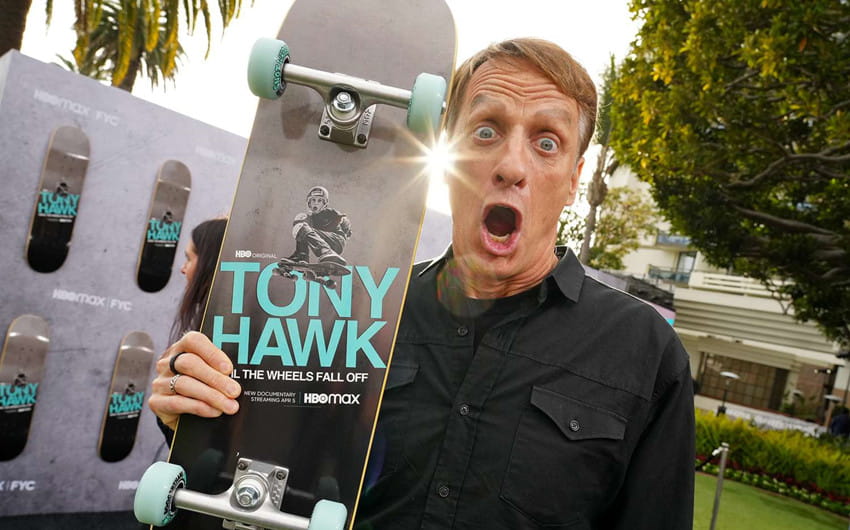
image source: https://people.com/sports/tony-hawk-looks-back-career-new-documentary-until-the-wheels-fall-off/